How Rust Workshop Skins Get Accepted — Facepunch's Own Rules, and What Creators Actually Earn
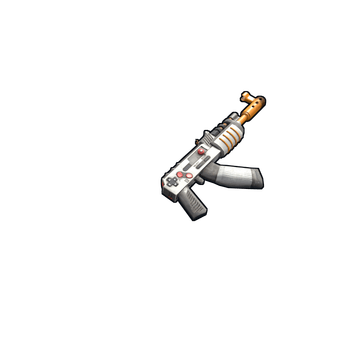
A Rust skin gets accepted when Facepunch picks it from the Steam Workshop for a weekly item-store rotation, and Facepunch has written down how it chooses: "whichever is obviously the best, whichever has the most votes, whichever is presented nicer," with a preference for artists who have not been approved before. The creator is then paid from store sales — and from nothing else, because "Steam doesn't have a way to split fees from market transfers."
Every tradable skin on the buy-and-sell sheet went through this door. This sheet is the door, in Facepunch's words, read from its wiki on 9 September 2026, plus the parts Facepunch has not published and we therefore label unverified.
The pipeline
Creators build a skin against Facepunch's published item templates, upload it to the Rust Steam Workshop, and the community votes. Before a submission is even publicly visible or eligible, the artist must have an accepted Contributor Agreement on file. Facepunch staff then select items for a rotation — about twelve a week, sold at $1.49–$3.49 — and after the store run the skin is removed. Facepunch's FAQ: skins "are removed when they've been around for a long time or have made too much money," particularly the bright, visible ones, to keep them rare.
That removal is what makes acceptance valuable to players as well as creators. A skin is sold once, for a week, and then only exists in the copies that were bought. The item store explainer follows the price from there.
What Facepunch says gets a skin picked
The selection page is short and blunt. Its concrete guidance, quoted:
- Look the part: "items should look dirty and worn." Avoid "highly colourful, even glowing items." The game is a mud-and-rust survival sandbox; a chrome unicorn reads as a bug.
- Respect the tier: don't make a burlap shirt look like metal armour, because it "could be mistaken in game for some kind of armour."
- No IP you do not own: "This includes your favorite game logos, photos of celebrities, items from other games." Copyright is judged case by case — "We can't really tell you where the line is without seeing it."
- Minimise text: "By adding words and phrases to your skins you're reducing the likelihood that we'll accept your skin" because "we can't localize it." Text that works without being readable is tolerated.
- Avoid the crowd: another camo pattern "which looks like every other skin" is unlikely to be picked; "Some items don't have many skins. It's worth considering making a skin for these items."
- Present it: "Add a description, add extra screenshots etc."
And the line every hopeful creator should read twice: "There's no sure fire way of getting your item accepted by us." Community conduct is a stated factor; the FAQ says an artist who "is a general arsehole in the community" is less likely to be approved first.
What creators earn — and the guide error
Creators are paid a share of item-store sales of their skin. They are not paid when the skin is resold on the Steam Community Market or anywhere else. Facepunch's FAQ states it directly: "Artists receive no money from crate or marketplace sales," because Steam cannot split fees from market transfers. Guides that promise creators "a percentage of each sale on the Marketplace" have it backwards, and it matters for buyers too: paying $345 for a Glory AK47 on Steam sends 15% to Valve and nothing to the artist.
How much the store share is, Facepunch has not published. Garry Newman said on 3 November 2017 that Facepunch had "paid out over $1m to Rust's skin authors" since the programme launched in July 2015. A third-party tracker claimed in 2026 that creators receive 25% and have earned at least $4.7 million in total; the total is plausible against the 2017 figure, the percentage is unconfirmed, and we print both as claims rather than facts.
Crates, DLC and the permanent store
Not every cosmetic goes through the workshop route, and the others do not pay creators the same way. In-game crates are craftable for free or bought on the market — "they are not sold by developers" — and pay artists nothing. Facepunch's own packs (the March 2026 Storage Box Pack at $17.99, the Industrial Decor and Jungle Packs at $12.99) and the permanent store launched in November 2021 are first-party products: not tradable, not marketable, "hold no resale monetary value." When the store's Top Sellers row shows a pack beside a workshop skin, only one of them is an asset.
Why accepted skins are the whole market
Count what is tradable on Steam for Rust and you are counting accepted workshop skins plus older store items: trackers put the catalogue at about 6,200–6,600 skins on the read date (6,296 on rusthelp, 6,183 on another, 6,565 on a third — they disagree at the margin). Every one of them was a workshop submission that Facepunch chose, sold for a week, and stopped selling. That is why the acceptance rules above are also a rough guide to what holds value: worn, legible at range, on an item few skins exist for.
Where to watch submissions
Facepunch's own workshop hub lists submissions with votes, and it is the only official signal of what might be picked; community trackers republish "workshop skin checks" weekly, one dated 20 January 2026 among the most recent we found on the read date. Neither is a schedule. Facepunch states no acceptance timeline and no queue, and a submission can sit for months before it appears in a rotation or never appear at all. Treat the vote count as a weak leading indicator and the Thursday store page as the only confirmation.
For creators: the honest arithmetic
Twelve slots a week against a workshop of thousands of submissions is the ratio. A picked skin sells for one week at $1.49–$3.49, the creator's share is unpublished, and the resale market that follows pays the creator nothing however high it climbs. The upside is real — the 2017 payout figure proves it — but it is a store-week business, not an annuity. Creators who want to see where their accepted work ends up can watch it on the most expensive Rust skins sheet, where the gap between store price and market price is the point.
Questions off the sheet
How do you get a Rust skin accepted?
Do Rust skin creators get paid?
How many skins does Facepunch accept each week?
Why was a skin removed from the Rust store?
Check this against the whole wall: the where-to-buy-and-sell Rust skins sheet with every marketplace fee dated, or the best Rust skins by item.