The Rust Item Store Explained: Weekly Rotation, the 7-Day Lock, and Why Old Skins Cost $300
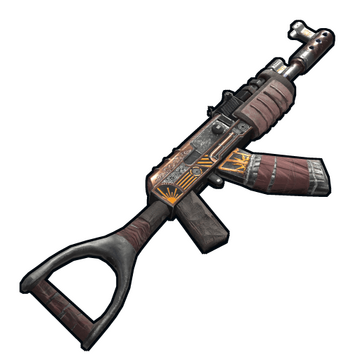
The Rust item store is a weekly shop inside Steam where Facepunch sells about twelve community-made workshop skins for $1.49–$3.49 each, rotates them on Thursdays, and removes most of them afterward. That removal is the entire Rust skin economy in one sentence: supply is fixed the day a skin leaves the store, so anything players keep wanting can only go up.
This sheet documents the mechanics with Facepunch's own words where they exist and says "unverified" where they do not. The buy-and-sell sheet covers what happens to a skin once it reaches the markets.
What is in the store this week
The 3 September 2026 rotation, read on the rusthelp store tracker, carried 12 items priced $1.49–$3.49 with most between $1.49 and $2.99. The Steam item-store page on 9 September 2026 showed a Featured row of eight items — Pirate Wood Armor pieces at $1.49, a MetalCore SKS at $2.49, a Hazma Wooden Door at $1.99 and two Waterpipe Shotgun skins at $1.99–$2.49 — alongside a Top Sellers row dominated by Facepunch's own packs: Industrial Decor, Jungle and Arctic Packs at $12.99, a Shipping Container Building Skin at $13.99 and the Storage Box Pack at $17.99.
Those two rows are different products. The featured workshop skins are the ones that become tradable and marketable; the packs and permanent-store items are not resellable at all, and buying guides that list them together are mixing an asset with a purchase.
When it rotates
Every Thursday. The tracker's current rotation started on Thursday 3 September 2026 and showed "1d 2h 40m left" when we read it on Wednesday; weekly rotation reviews across the tracking sites are dated Thursdays going back years. What nobody can source is the hour: Facepunch does not publish a rotation time, third-party guides disagree ("every Thursday or Friday," says one), and any site printing a precise UTC time is guessing. Steam does not notify you either; the tracker sites and the item-store page itself are the only alarm.
The 7-day lock
Anything bought from the Rust item store cannot be traded to another player or listed on the Steam Community Market for a minimum of seven days. After those seven days most skins become tradable and marketable. The exceptions are exclusive event skins — Charitable Rust, Trust in Rust, Twitch Drops — which never do.
Two consequences follow. First, the flip is a bet on next week's price: by the time a store purchase is sellable, the rotation has moved on and the market has decided whether it cares. Second, the lock is on the item, not the account; mobile authenticator status changes Steam's ordinary trade holds but not this one.
Why removed skins climb
Facepunch's workshop FAQ answers this in one line: skins "are removed when they've been around for a long time or have made too much money," and bright, visible skins in particular are pulled to keep them rare. Re-releases happen but are the exception. Once an item is out, every copy that exists is every copy that will exist, minus the ones lost to abandoned accounts.
The Glory AK47 is the clean example. It sold for $1.99 on 20 April 2017, in what the trackers number as store #206. Its median sale hit an all-time high of $498.97 on 22 January 2021 and its all-time low was $1.12 on 19 October 2017 — six months after release, when the flippers gave up. On 9 September 2026 the lowest Steam listing was $345.00 with a $336.53 median and two sales in the window. Nothing about the skin changed; the supply stopped.
The counter-example matters just as much. The Tempered AK47, released 12 February 2016, set an all-time-high median of $138.38 on release day and traded at an $11.61 lowest listing with 79 sellers on 9 September 2026. Several "most expensive Rust skins" articles published in 2026 still price it at "$200–$500+." They are copying each other, not the market — which is the reason this site prints read dates.
What Facepunch and the creator earn
Store sales are where the workshop artist is paid; market resales are not. The FAQ is explicit: "Artists receive no money from crate or marketplace sales … Steam doesn't have a way to split fees from market transfers." Garry Newman said in November 2017 that Facepunch had paid "over $1m to Rust's skin authors" since the programme began in July 2015; a 2026 claim by a third-party tracker that creators receive a 25% share and have earned at least $4.7 million is plausible but not something Facepunch has published, so treat the percentage as unverified. The workshop acceptance sheet covers how a submission becomes a store item.
On a resale, the only party paid besides the seller is Valve: 15% of every Rust sale on the Community Market, 5% as a Steam fee and 10% as the game-specific fee.
Store items versus everything else
It helps to keep four categories straight, because the store sells three of them side by side.
- Rotation workshop skins: tradable and marketable after seven days. The only category with resale value.
- Permanent-store items (Nomad Hazmat, Factory Door, Industrial Lights and the like since November 2021): never tradable or marketable, by design.
- Facepunch item packs (Storage Box Pack, Industrial Decor Pack): sold in the same store, not resellable.
- Crate drops that appear in a rotation: some rotation items are tagged "Tradable · Crate Drop" without "Marketable" — the 3 September 2026 rotation carried two such items.
The rotation as a market signal
The store page is also the cheapest price intelligence in the game. When a skin appears in a rotation, every existing copy on the market competes with a $1.49–$3.49 store button for a week — which is why re-releases are rare and feared by holders, and why a skin's first week on the market after the lock lifts is usually its cheapest. Watching which categories Facepunch has been favouring (armour sets and doors in the September 2026 featured row; a run of storage-box designs earlier in the year) says more about next quarter's supply than any price chart.
Should you buy from the store or the market?
From the store, if the skin is in rotation this week: $1.49–$3.49 with no fee and no seller markup beats any market price for the same item during the same week. From the market, for anything that has left — and there the choice is a cash marketplace with a 0% buyer fee over Steam, where sellers price in the 15% cut. The best Rust skins by item sheet lists what is worth buying either way, and free Rust skins, honestly covers the third route, which is slower than both.
Questions off the sheet
What day does the Rust item store reset?
How many skins are in the Rust item store each week?
Can I sell a skin I bought from the Rust item store?
Do Rust store skins go up in value?
Check this against the whole wall: the where-to-buy-and-sell Rust skins sheet with every marketplace fee dated, or the best Rust skins by item.