Free Rust Skins, Honestly: Playtime Drops, Twitch Drops, and the Offers That Aren't
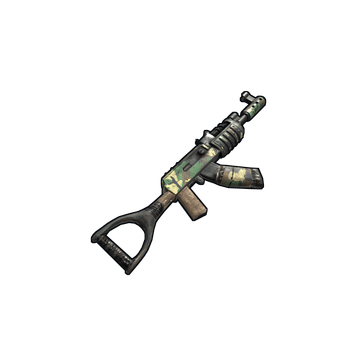
There are exactly two legitimate sources of free Rust skins: Steam's playtime drops, which hand you a low-value cosmetic after roughly 12 hours played, and Facepunch's Twitch Drops rounds, which give away exclusive skins for watching streams during announced windows. Both are real, both are worth little in cash terms, and neither involves a deposit, a code, or a case.
Everything else that turns up for "free Rust skins" is either a marketplace sign-up bonus or a gambling site, and this sheet draws the line between them with numbers.
Playtime drops: the numbers
Rust uses Steam's Playtime Item Grant system. Garry Newman's 2018 posts set the automatic grant at 720 minutes of playtime — twelve hours — with a maximum grant frequency of 1,440 minutes, or once per day. In practice players report a drop every 12 to 24 hours of play, delivered straight to the Steam inventory with no action required.
What drops is the point. Drops are low-value skins, typically worth cents to a couple of dollars on the Community Market; uniquely designed store skins are not in the drop pool. Over a hundred hours of Rust you will accumulate a handful of items that, sold on Steam at 85% of a dollar or two each, buy roughly one rotation item. Free, real, and small.
Twitch Drops: the 2026 rounds
Twitch Drops are the only way to get skins that are genuinely exclusive, and they are also the skins you can never sell. Facepunch runs rounds several times a year and announces each one shortly before it starts rather than publishing a calendar. The campaign history for 2026 on the read date: BurntPeanut's Wasteland (16 April), Rust Rivals and a Twitch Rivals exclusive (13 May), the Charity '26 set — Box, Bed, Backpack, Furnace and Turret drops across 2–29 July — and Global Warfare 4 (30 July). On 9 September 2026 there were no active drops.
To earn them you link your Twitch and Steam accounts, watch the named channels for the required minutes, and claim. Two rules matter: watching outside a drops window earns nothing, and drop skins are not tradable and not marketable — the same exclusion Facepunch applies to Charitable Rust and Trust in Rust items. A Twitch-drop hazmat you see selling for hundreds is a listing for an item that cannot be delivered, or a scam.
Workshop, crafting, servers, giveaways
The remaining honest routes are slower still. Submitting a workshop skin that Facepunch accepts earns a share of its store sales — see how workshop skins get accepted — which is work, not luck. In-game you can break skins down for Wood, Cloth and Metal and craft four types of crate, which is recycling rather than income. Some community servers award skins for playtime on that server; the skins are the server's to give, often via plugins, and stay on that server. Discord giveaways exist and are what they sound like.
Marketplace sign-up offers are a category of their own. SkinSwap's Rust page advertises "Receive 40% Deposit bonus today + Free Item" and a free-skins page; Tradeit gives referred users $5 on a first trade with a top-up bonus; Swap.gg and Lis-Skins run referral credits. These are real items paid for by the margin on your later trades. Take the free item if you were going to trade there anyway; do not deposit to "unlock" one, because that is the pattern the next section is about.
The offers that are not free
"Free Rust skins" is also the front door of Rust case-opening and skin-gambling sites: deposit money or a skin, spin, keep what lands. The mechanics are gambling, the audience skews young, and Valve's own December 2025 tournament rules bar such sites from sponsoring licensed esports events. This site may cover them, but it never links to scams; the About page sets out the rule. If a page promising free Rust skins asks for a deposit, a promo code that credits "coins," or a case to open, it is one of these.
The tell is simple: every legitimate free skin on this sheet arrives in your Steam inventory from Valve or Facepunch. Nothing legitimate routes through a third-party balance first.
Turning drops into a skin you actually want
The honest arithmetic works if you treat drops as Steam Wallet seed money rather than as skins. A playtime drop worth $1.50 sold on the Community Market returns $1.28 after Valve's 15%; four of them fund one item from the current Thursday rotation at $1.49–$3.49, bought with no fee and locked for seven days. Over a year that converts a pile of cents-cosmetics into a handful of store skins chosen on purpose. What it cannot do is reach a third-party cash marketplace: the wallet never leaves Steam, so the drop economy is a closed loop that ends at the item store — which, for a player who just wants a door and a box that look right, is exactly where it should end.
What free skins are actually worth
Take the honest routes together over a year of ordinary play: perhaps thirty playtime drops worth a dollar or two each, and two or three Twitch rounds of untradable exclusives. Cash value in the tens of dollars; the exclusives, priceless in the sense that they have no price. If the goal is the look rather than the ledger, the best Rust skins by item sheet finds tradable skins at $1–3 that beat most drops, and the buy-and-sell sheet shows where a 0% buyer fee makes them cheaper than Steam.
Prime Gaming and the other "official" freebies
Two more channels are legitimate and PC-only. Prime Gaming has periodically offered Rust cosmetics to Amazon Prime subscribers, claimed through the Prime Gaming site and delivered to the linked Steam account; like Twitch drops these are promotional items and the tradable status is set per item, so read the tag before assuming resale value. Facepunch's own seasonal events (Easter, the charity streams) sometimes hand out items in-game to everyone who logs in during the window. Neither requires a deposit, and both arrive from Facepunch or Valve — the same test as above.
Console players
Rust Console Edition has its own store, its own occasional promotional drops and a seasonal pass system; its skins are locked to the Xbox or PlayStation account and cannot be traded or sold. Twitch Drops, Prime Gaming rewards, the Steam Community Market and the Workshop are PC-only. Any "free console Rust skins" generator is a phishing page.
Questions off the sheet
How do you get free skins in Rust?
How often does Rust give you a free skin?
Can you sell Rust Twitch drop skins?
When are the next Rust Twitch Drops?
Are "free Rust skins" sites safe?
Check this against the whole wall: the where-to-buy-and-sell Rust skins sheet with every marketplace fee dated, or the best Rust skins by item.