How to Sell Rust Skins for Real Money (Fees Read 9 Sep 2026)
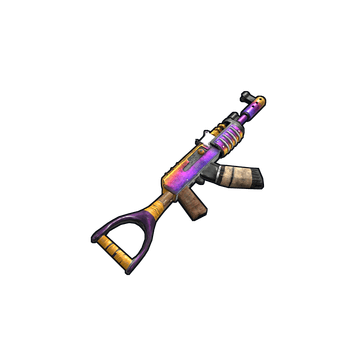
You can sell Rust skins for real money, but not on Steam: the Community Market keeps 15% and pays wallet funds that never leave Valve. Cash comes from third-party marketplaces — Skinport at a published 8%, DMarket at roughly 2–10%, and instant-sell sites that pay on a quote — and the whole process takes about ten minutes once your inventory is tradable.
This sheet is the walkthrough. Fees were read from each market's own pages on 9 September 2026; the ranked comparison with grades is on the Rust skins buy-and-sell sheet.
Step 1: check the item is tradable at all
Before pricing anything, open the item in your Steam inventory and read its tags. Three kinds of Rust item cannot be sold anywhere, and two more are locked for a while.
- Twitch-drop and event skins (Charitable Rust, Trust in Rust, drops rounds) are not tradable and not marketable, ever.
- Permanent-store items and Facepunch item packs "hold no resale monetary value" and cannot be traded, per Facepunch's November 2021 permanent-store announcement.
- Console-edition skins live in a different game on a different platform; nothing here applies.
- Fresh item-store purchases cannot be traded or listed for a minimum of seven days.
- Steam Guard holds: a Rust trade from an account without the mobile authenticator sits on hold; set it up before you list, not after.
One thing you do not need to worry about: Valve's July 2025 Trade Protection, which makes CS2 trades reversible for a week, is CS2-only. Rust items are not covered, and a Rust item cannot even share a trade offer with a protected CS2 item.
Step 2: find the Steam price, then subtract 15%
Every marketplace prices off the Steam Community Market, so read it first. Search the item, note the lowest listing and the median of recent sales, and remember that a seller on Steam only keeps 85% — so a $100 Steam listing is really a $85 item to whoever listed it. Third-party markets can undercut that listing and still pay you more.
Do it with two real items on the read date. The Glory AK47 showed a $345.00 lowest listing and a $336.53 median with two sales in the window: thin, collector-priced, and a case for a listing market where you wait for the right buyer. The Tempered AK47 showed $11.61 with 79 sellers: liquid, cheap, and a case for whichever market has the smallest fixed payout cost.
Step 3: pick the door — listing market or instant sell
There are two ways to turn a Rust skin into money, and the fee structure is different for each.
A listing market (Skinport, DMarket) lets you set a price and waits for a buyer. Skinport's fee is 8% of the sale (6% above a currency-dependent threshold of about €1,000; 2% for private listings), with 0% for the buyer, and it runs a dedicated Rust storefront. DMarket charges roughly 2% on standard items, up to about 10% on low-liquidity ones, and had 45,788 Rust offers on 9 September 2026 — the deepest Rust inventory we could count — though its fee article returned a 403 to our re-read, so that band comes from our 4 September 2026 partner verification.
An instant-sell site (SkinSwap, Tradeit, Lis-Skins, Swap.gg's sell option) pays now on a quote. SkinSwap pays PayPal, Bitcoin, Ethereum or Litecoin and publishes no percentage — the fee is the gap between quote and Steam price. Tradeit's own sell page says fees "usually range from 0% to 30%," with 3% off for putting tradeit.gg in your Steam name, and cash-out costs 2% with a $10 minimum. Lis-Skins' instant-sell is quoted at about 90% of value by our sheet and about 60% by a 2026 third-party review; we print the conflict rather than guess.
Rule of thumb from the yard: take an instant quote only if it beats the Steam lowest listing minus 8%. That is what Skinport would pay you for waiting.
Step 4: what $100 nets, door by door
Run a $100 Rust skin through each route with payout costs included and the ranking writes itself.
- Steam: $85.00 in wallet funds. Not money.
- Skinport: $92.00 to bank or PayPal ($94.00 above the high-value threshold).
- DMarket: about $98.00 on a liquid item, then 1–3% withdrawal — roughly $95–$97 in hand; $87–$89 on an illiquid one.
- Tradeit at a mid-range 10%: $90.00, then 2% cash-out — $88.20.
- Lis-Skins at 6–10%: $90–$94, then 3.5% + €0.50 by card — roughly $86–$90.
- SkinSwap or Swap.gg: whatever the quote says, which is why you compare it to $92.
For a $2 skin the percentages are noise and the minimums are everything. Tradeit's $10 cash-out floor alone means a single cheap door skin cannot become cash there; sell cents-items on Steam and spend the wallet on the next rotation, or bundle a dozen into one trade-bot swap for something worth listing.
Step 5: the payout itself
Listing markets pay after the buyer's trade completes and any hold clears; Tradeit's page words it as "after the Steam trade protection period ends, your payout is released," which for a Rust item means the ordinary Steam trade-hold logic, not CS2's seven-day reversal window. Expect bank and PayPal payouts to add a day or two; crypto is faster and, on Lis-Skins, cheaper (0.4% plus network fees against 3.5% + €0.50 by card).
Three payout habits that cost nothing: withdraw rather than leaving balance on a site that offers a "40% bonus" for keeping it there (Tradeit and SkinSwap both do — the bonus is a markup on their store), screenshot the quote before accepting a trade, and never accept a trade offer from anyone who contacts you first.
Selling from a fresh store purchase
The weekly item store is the only place a Rust skin is ever cheap and fee-free, which is why some players buy the rotation and flip it. The seven-day lock makes that a bet on next week's price, not this week's, and the item store explainer shows why most rotation items drift toward a dollar rather than upward. The ones that climb are the ones Facepunch never re-releases, and you cannot know that in the week they are on sale.
What to sell first
If you are clearing an inventory, sell the illiquid, high-value pieces on a listing market first — they take longest to find a buyer — and the commodity items last, in bulk, wherever the fixed payout cost is lowest. Glory-tier items belong on Skinport or DMarket at a price you set; dollar-tier doors and boxes belong on Steam or in a trade bot. The Rust trade sites comparison covers the bot side, and the most expensive Rust skins sheet is a sanity check before you list anything you think is rare.
Questions off the sheet
What is the best site to sell Rust skins for real money?
Can I sell Rust skins for PayPal?
Why won't Steam let me sell a Rust skin I just bought?
How much does Steam take when I sell a Rust skin?
Is it safe to sell Rust skins on third-party sites?
Check this against the whole wall: the where-to-buy-and-sell Rust skins sheet with every marketplace fee dated, or the best Rust skins by item.